Friday, 20 December 2019

Prowling for Owls

What are all these people doing in the woods at night?


This was one of the four nights we hosted cub packs from Bradley Stoke Cubs on an owl prowl, led by Ian Mcguire of 'Wild Owl'.


Ian imitated the owl calls and played recordings of them so that the owls responded, looking to see who was trespassing on their territory.  When they flew over us Ian shone his very powerful flashlight and we could see the bird flying to a new perch in a nearby tree.


He also told us a lot about British owls at various stops round the woods.  It was quite exciting walking round quietly in the darkened woods.   Ian says that keeping some of our grassland long encourages voles and that's what the owls like to eat.

And here is a five minute video about tawny owls by Ian McGuire, our guide on the night(s).  If you don't want to listen to it all, the calls we heard are featured at the beginning.


Wednesday, 18 December 2019

All der year round

An excellent source of food for finches especially siskins, are the conelets of all three alder species found in the UK.  Common alder and grey alder produce large bunches of small conelets full of tiny seeds. 
(In the picture below the leaves are ivy and the bark is grey poplar)


Whereas the Italian alder has larger conelets but not so many in a bunch.


They are called conelets because they look like fir cones but alders are clearly not coniferous (bearing cones).  Here are some more Italian Alder conelets with the right leaves and bark, photographed in Vilner Lane Wood.


It's an old joke - or a way of remembering - that alder trees keep their conelets on into the winter until the new green conelets develop the following year so they can be recognised by having conelets on 'all der year round' (boom boom)


Sunday, 15 December 2019

Wildlife or vermin

This rather sweet and furry little chap is not actually having a rest.  He was kindly brought in by my cat Polo, who is just as keen on wildlife as me but is unfortunately a psychotic, serial killer.


Rats are nearly always associated with humans, either in compost heaps, sewers, warehouses or on farms but they are wild creatures of some considerable intelligence and not entirely unattractive.  

They do however suffer from a long association with the spread of human diseases from bubonic plague to weil's disease.  They are very successful, which like sycamores, dandelions, ground elder, bindweed, bluebottles and mosquitoes makes them unpopular.

There is also the mythology such as 'You are never more than six feet from a rat' or 'There are more rats than humans' which persist without any supporting evidence.  This is sensibly dealt with in this    BBC article  .

Well my solution to most instances of unpopular or harmful animals is that if they are in my house then I fight back but if they are out there in the wild I let them be.

Invasive plants and alien creatures are a bit more complicated - worth another post.

Friday, 13 December 2019

Path round Vilner Lane Wood

In November, in the wet, six of us marked out a path in Vilner Lane Wood.  This is the little wood under threat from development.  While campaigning to save it we are giving people the opportunity to follow this circular route if they call in at the community compost site on a Saturday morning when the volunteers will be on hand to let them in.


Visitors will be able to choose the path to the left or the path to the right.


You can follow the path in either direction as it winds amongst the trees and back to the start.


 And while you're there you can buy a bag of firewood or compost, on sale Saturday mornings or Wednesday afternoons, although the site is currently closed to those who wish to leave green waste.  This is largely because there is no funding left for processing the waste.

Tuesday, 10 December 2019

Campfire or amphitheatre

If you turn up this pathway opposite one of our huge beech trees  ..  ..  ..


..  ..  ..  you come to the ruins of a former cowshed.  This was cleared of brambles and other undergrowth by our volunteers in late October.   It looks full of potential but we never quite get there before the brambles re-grow and smother it again.  It could be a place for a campfire site or a barbecue.


And looking from above I often feel it could become an open air amphitheatre  ..  ..  ..


..  ..  ..  rather like the Minack Theare in Cornwall that I visited this year.


Well, that might take a while!  


Sunday, 8 December 2019

Fallen oak, dead but alive

When Filnore Woods was first re-created in 1987, there were two large oak trees side by side.  But in 1993, one of them fell over.  

The roots had rotted.  This apparently dead hulk, with the branches forming antlers like a stag's, still supports a myriad of small life forms:  beetle larvae, mosses, lichens, fungi.

 In the cracks and splits of the old wood, you can find tiny but graceful toadstools


While the old tree's twin continues in robust good health alongside. 


Tuesday, 3 December 2019

Turkey Tail

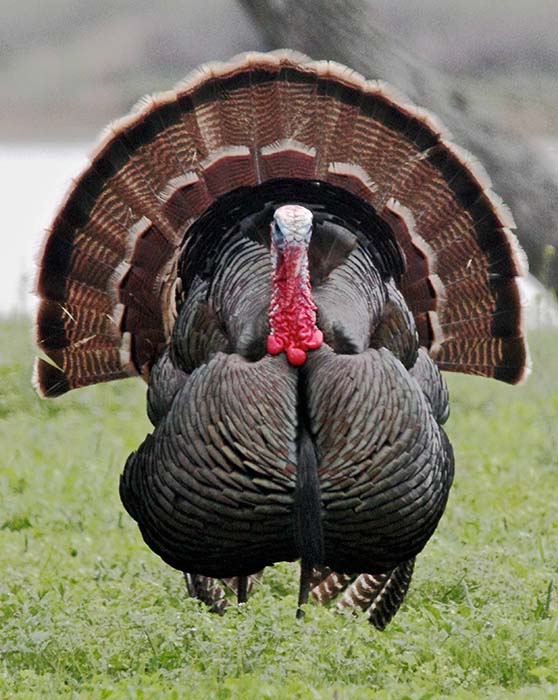
The American name Turkey Tail is jollier than the rather prim British name 'The many-zoned plypore'.  But both names describe the concentrically zoned colour pattern on this fungus - like a turkey's tail (see below)  


It grows on dead wood and sometimes living trees 
especially on a broken branch or pruning wound


The wavy edge of the clustering brackets has a white edge, which fades as the brackets age.
btw the white edged fungus in my previous email about sulphur tuft fungus was apparently a very young crop of turkey tail - info thanks to Simon Harding


Image result for turkey bird
Hi guys!  Are you ready for Christmas?
Image New Hampshire PBS