Sunday, 17 February 2013

Buzzard

Continuing this series of birdy posts about species recorded in the Filnore Woods bird survey which was published on this site on 26th November.


Have you ever noticed a huge bird sitting hunched on a roadside fence post and thought "I've just seen an eagle!" ? 
I have.  But in the south-west of England it's much more likely to be a buzzard. 
 
The usual way I notice them is the rather plaintive flight call sometimes called mewing.  It goes down in pitch towards the end, which gives it it's sad feeling.  It's a bit like that bird of prey you hear in cowboy films  -  a sure sign that "someone's gonna die today."
 
 
When you hear the cry look up and you will probably see the buzzard soaring on air currents with its wing spread wide and motionless in a shallow v-shape.  Occasionally you may see crows or gulls mobbing the buzzard in the sky.  They don't like birds of prey.
 
Someone probably is gonna die when you hear that cry, but it will most likely be a vole or possibly a rabbit 

Field vole from Devon Wildlife Trust

Buzzards do also take humbler fare like insects and earthworms.  This is why they like to hunt over grassland although they nest in tall trees.  You don't get field voles without fields.  So a combination of woodland and grassland such as we maintain at Filnore Woods, is an attractive habitat for buzzards. 
 
They usually eat their prey on the ground.


They are also partial to pheasant chicks, which has given rise to a bit of controversy.  Gamekeepers want the ever increasing buzzard population controlled, while organisations like the RSPB say no bird of prey should be shot or poisoned for sporting reasons.  I think there is a middle way.  I'm definitely not a fan of pheasant shoots but they do ensure that some wild country is conserved.  And the explosion in the population of buzzards may be in some way related to human activity.  We are part of the natural scene.
 
But when you hear that imperious cry and see that noble bird soaring like our equivalent to the condors of the Andes, you have to feel privileged and glad that they are there.

For opposing views on buzzards and pheasant chicks look at the Countryside Alliance's website, RSPB and  George Monbiot's blog for 24th May on the guardian website.
Google 'buzzards and pheasants' and on page two there is a jolly good (haw haw) forum for gun dog owners http://workinghprs.myfastforum.org .    I won't make a comment.  Read it yourself.


Tuesday, 12 February 2013

Clearing the way

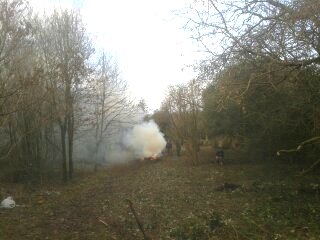
At the southern end of Cuckoo Pen, between posts 19 and 12, the path had got very overgrown and so it was not drying out.  In fact it was a bit of a quagmire.
 
We decided to cut back the brambles which you can see on the right of the picture below. 


So we did! - sorry for the crummy picture below,  taken on my phone. 


Looking up the path before . . .


. . . during . . . 


. . .  and after, when we had burnt all the brambles we had harvested.  There is now a wide path up the Jubilee Way between Cuckoo Pen and the old hedgeline
 

Thursday, 7 February 2013

Dunnocks are singing

At last we have had some sun and the merry sound of birdsong has increased.  Robins and great tits are the most common songs at the moment but the other day I heard a familiar voice.  I had forgotten who it belonged to.  It was a bit like a robin and a bit like a wren but without much shape to the song - no beginning or ending.  Just a chattery, chirrupy burble that rattled along and after a short pause was repeated.  Then suddenly I saw him sitting on a wall -  Denis the Dunnock.  Also known as hedge accentor or hedge sparrow, though he is much shyer and more fragile looking than a true sparrow. 

from the onejackdawbirding blog
 
He spends most of his time fossicking around on the ground like a mouse, in and out of the undergrowth, where he hunts for insects and spiders with his thin little bill.
 
I say 'him' but you can't really tell the males from the females.  They can, of course, but their sex life is unusual.  They are rather promiscuous and a female may have several boyfriends at the same time.  The males are also likely to be two timing.  They don't seem to mind and one nestful of nestlings may have three or more adult birds feeding them. 
 
They nest in thick scrub so we will be careful not to destroy any more bramble patches at Filnore Woods after the end of February, when the nesting season starts.
 
 
As well as the bubbling song they have a loud 'tseep' call which they repeat, especially when two male birds are competing for territory.  Perhaps they do mind sharing after all.
 
If you get this direct to your email you won't be able to hear the song on the video below but you can if you visit 'Filnore Woods Blog' at http://filnorewoods.blogspot.com.


Video by Alex Sally on YouTube


Monday, 4 February 2013

Colonisation of bramble patch


The welcome area, which was cleared of brambles last spring (see post 27/12/2012), is still sprouting brambles and nettles but some other plants are moving in already.  This includes several tufts of grass - not sure what species yet -


some cranesbills


common dock


spear thistle


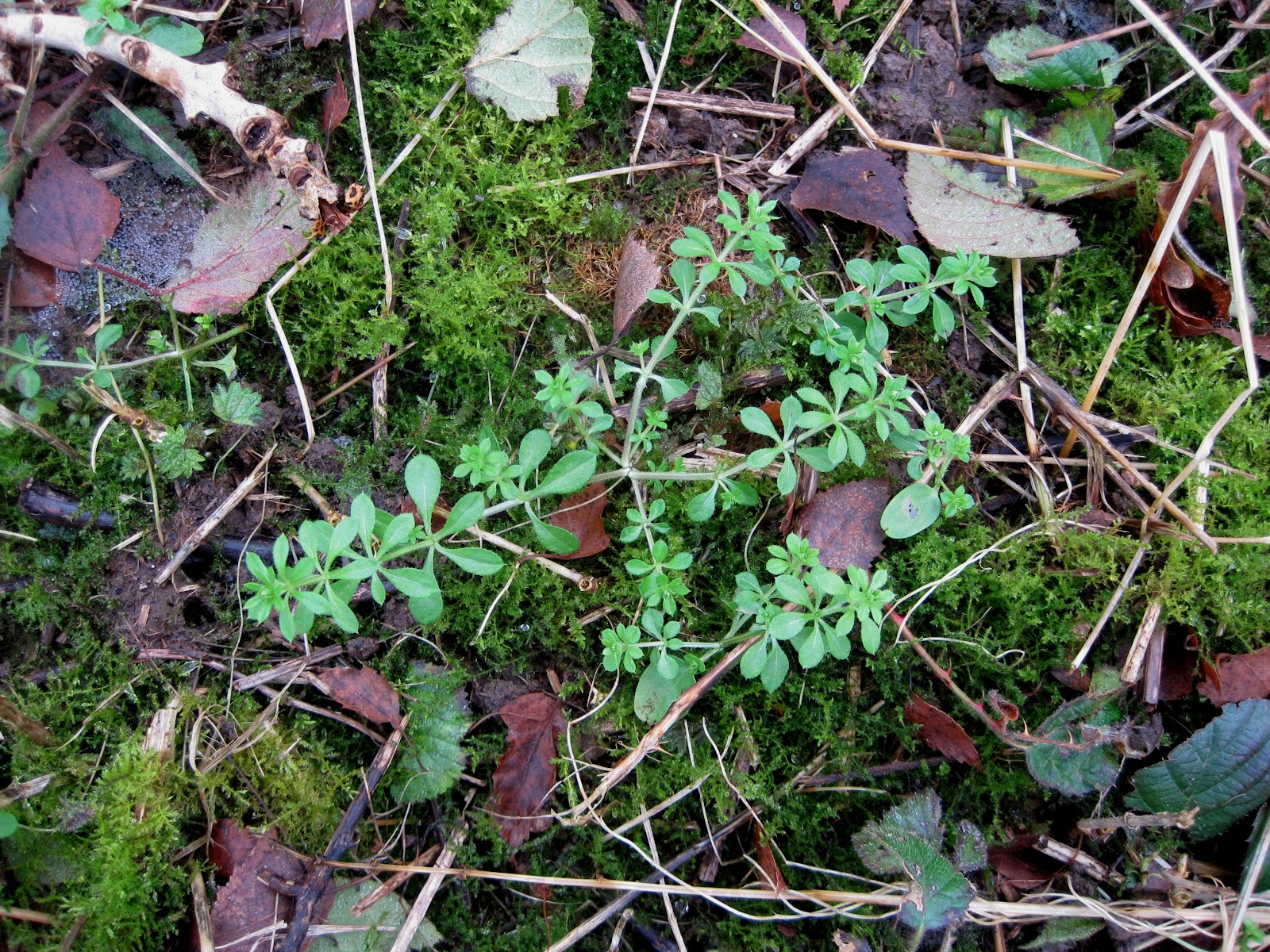
goosegrass


white dead nettle


buttercup (of course)


and red campion

 
Looking forward to more new arrivals and lots of flowers this summer


Thursday, 31 January 2013

Butterflies in the wet

If you go to the BBC website homepage and click 'Nature' under the 'Explore' heading down on the right, you come to a load of interesting stuff.  Scrolling down a week ago I came to an article headlined 'Some butterflies enjoy wet 2012.'  This recounted that the lush growth of grass in last year's wet summer favoured butterflies whose caterpillars eat grass.

This includes gatekeepers


meadow browns


marbled whites


and ringlets


On the other hand most butterflies did badly in the wet, notably the common blue, down in number by more than half.  In fact lots of insects sufffered in the wet weather because moulds, viruses, bacteria and fungal diseases prosper in damp conditions. 
 
Who cares?
 
Well we all should. 
 
I like insects and spiders, but even if you don't, they are an essential part of the web of life.  No caterpillars at nesting time means blue tits' and great tits' babies starve.  No tawny mining bees at apple blossom time and who will pollinate the flowers and start the fruit growing?  If ladybird and lacewing populations plummet, aphid pests have nobody feeding on them and so no check on their numbers.

Photographs are from the excellent www.ukbutterflies.co.uk.  See also www.butterfly-conservation.org and www.buglife.org.uk.

Sunday, 27 January 2013

Crows

Another bird from our bird survey

Yesterday there was a crow on the fat-ball feeder in my garden! We often get magpies and occasionally jackdaws but this crow was clearly desperate for something to eat.

Crow (rspb)

 
The crow or 'corvid' family includes Crows, Rooks, Jackdaws, Jays, Magpies and Ravens.  The Crow is the most frequent visitor to Filnore Woods out of these, as you can see on the bird survey results posted on 26/11/2012.  But all six species have been recorded there.

Rooks 'caw' conversationally but crows shout their harsh 'Caaar, caaar, caar' three or four times together.  If you see a crow perched somewhere when calling, he or she makes a bow with each 'Caaar'.  Their larger, more solitary cousin the raven makes a thoughtful and deeper 'Cronk' as it flies past.

Crow calling
 
Crows are all black and rather tidier than the less sinister but more disreputable looking rooks who have dirty white faces and shaggy trousers.
Rook (rspb)

 
Crows are very intelligent birds as are all the corvids and can be taught to do things. That is why they feature in so many films such as Hitchcock's "The Birds".  If you have ten minutes to spare there's an interesting TEDtalk on YouTube called 'The amazing intelligence of crows'.

 
The full name is Carrion Crow (Corvus corone) because they will feed on dead animals or carrion and help to tidy up the place.  We need such carrion feeeders - nature's dustmen or garbage collectors.  (I get more American readers of this blog than British, strangely.)  I often see crows pecking at roadkill.  They are omnivores though and will scoff down whatever they can find - insects, baby birds, seeds, berries, worms and even newborn lambs.  They are successful as a species because they are so opportunistic - like dandelions!

Monday, 21 January 2013

Lovely, dark and deep

I stopped by the woods on a snowy evening.
Two ashen sentinels guarded the entrance


The path led through the trees


to a slope of implacable snow, dotted with criss-crossing tracks of birds and deer and foxes - you can tell by the smell in the air.


Like the trees, the snow and ice are indifferent to our presence.  They don't care if we are there; they don't care if we're not.
 

But what is this?  I am not alone. 
 

Someone with big boots has been here


And these parallel tracks?  What sort of animal?


Aha!  A small person and his dad run ahead while mum pulls the sledge.

Oh yes, of course.  Filnore Woods Community Woodland is for families as well as would-be poets!