Tuesday, 27 August 2013

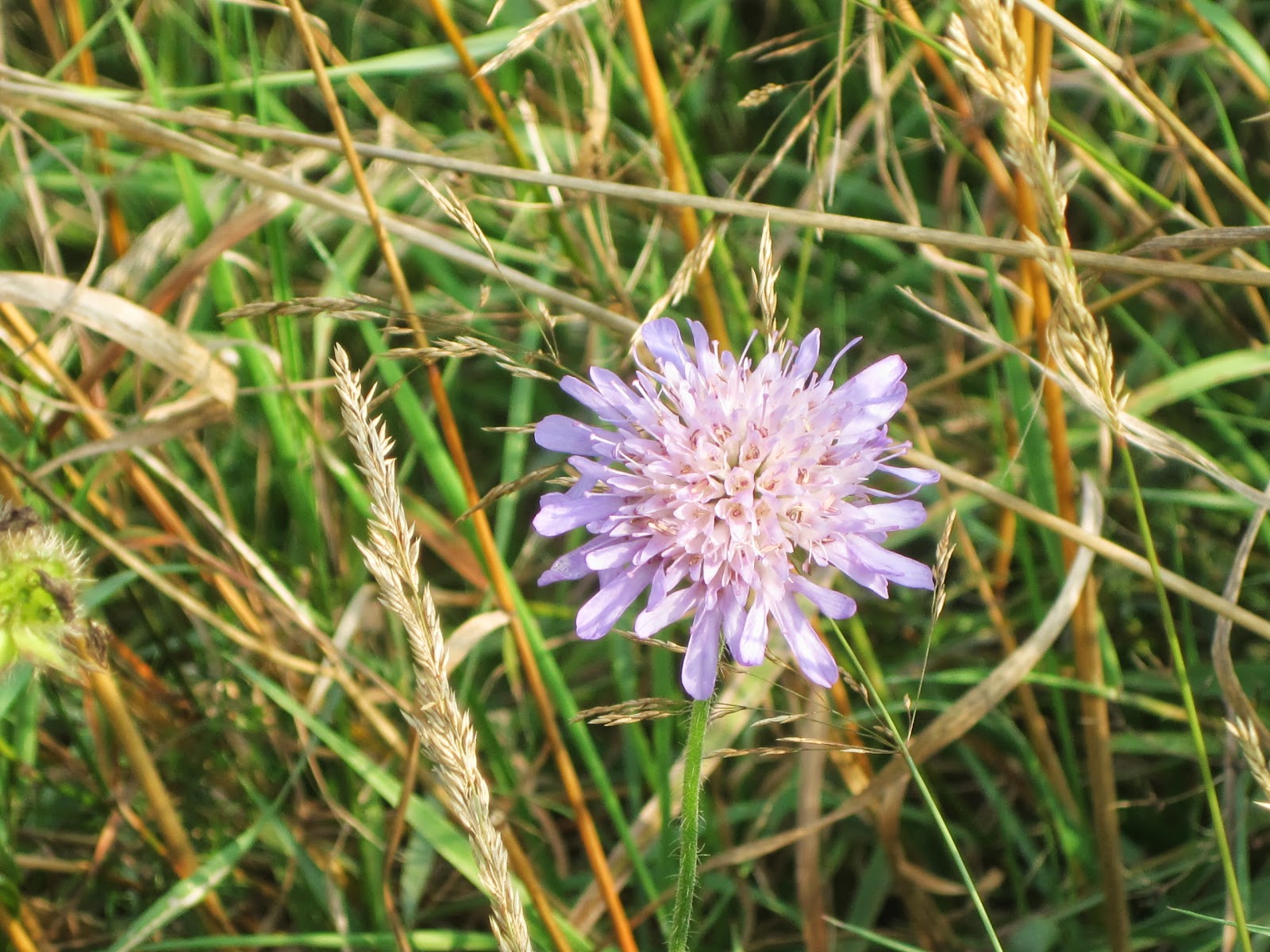
Field scabious

Still one of my favourite wild flowers.  We used to have lots of this in the grassland at Filnore Woods but we must have been doing something wrong because there is not nearly so much now.
 

Each flower head is made up of up to 50 indivdual mini-flowers, making them more attractive to pollinating insects. 
 
It gets its name Scabious from its former reputation as a cure for scabies.


Monday, 26 August 2013

This new post at the top of Vilner Lane is to draw attention to the footpath leading through the 'tree nursery field' section of Filnore Woods.  A lot of people miss out this part of the site as they don't realise it is part of Filnore Woods.
 
 
You can see post 13 further back and to the right.  Follow the path and you come to the land of Rosebay Willow Herb.
 
 
Past the line of Beech trees near post 14 you come to post 15 and a collection of other odd species of tree formerly part of Northavon Council's tree nursery.
 
After the leaning Silver maple tree . . .
 
 
. . . the path doubles back at number 16 painted on a tree,

 
and leads you through the old hedge

 
and back into the cowshed field to the new post 17.

 
Find your way with one of our trail leaflets available from Thornbury Library, the Town Hall, the Leisure Centre or in the leaflet holder just inside the entrance to Filnore Woods.


Saturday, 24 August 2013

Surveying Invertebrates

We had hoped to conduct an invertebrate (creepy-crawly) survey on Sunday 4th August but unfortunately the rain stopped most of the little creatures from showing themselves.  Tony Smith and Tony Cotterell from Bristol Naturalists turned up anyway and had a look round the site in preparation for another visit at some time in the future.

Tony Cotterell and Tony Smith inspecting what has fallen on to the beating tray

The point of a survey is to see what is there.  Over time we hope successive surveys will show an increase in species recorded and in the abundance of individuals of any one species.

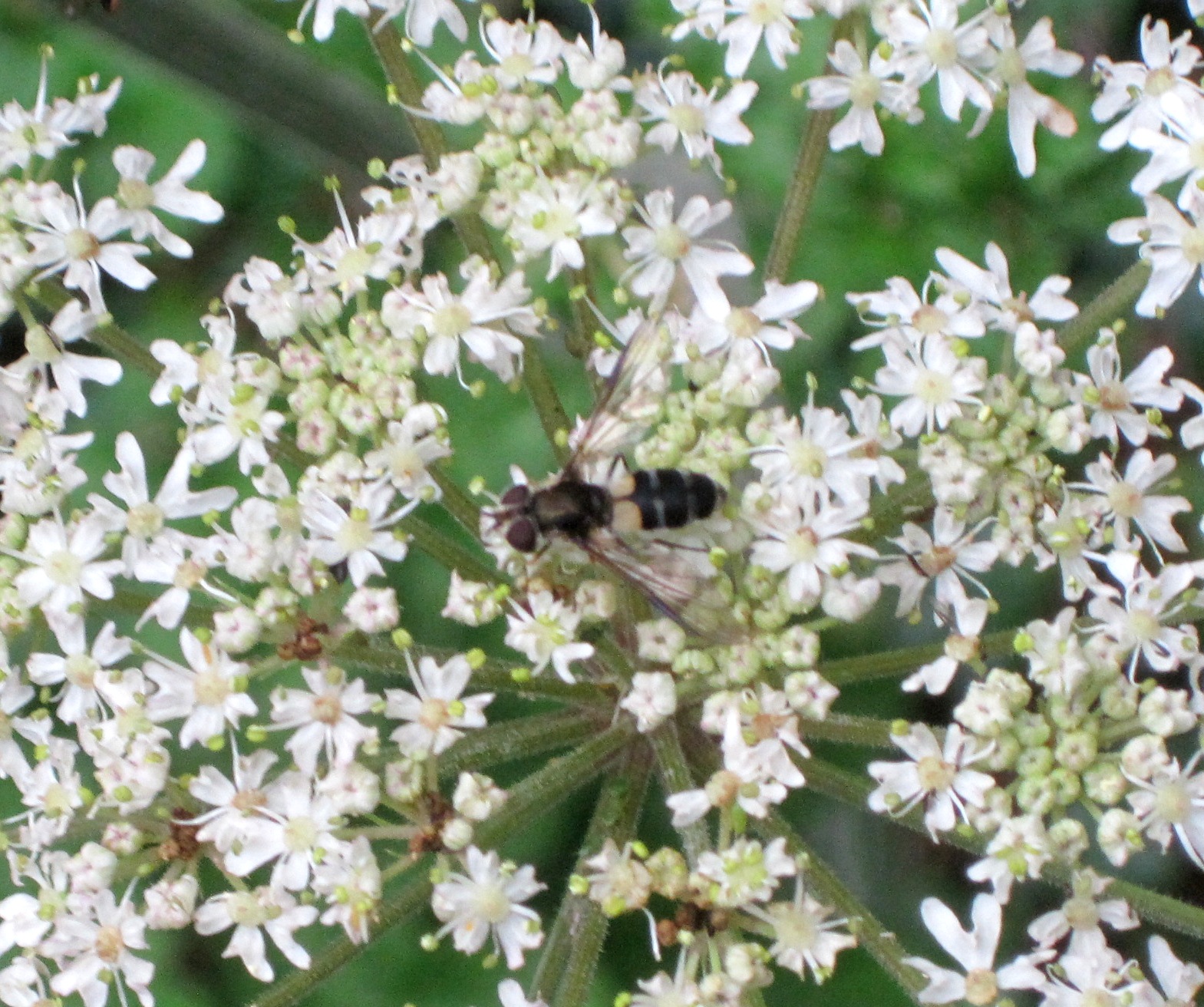
I snapped a few hoverflies


and some soldier beetles getting friendly with each other 

 
a seven-spot ladybird
 

and a friendly little saw-fly
 
  
I thought we saw only half a dozen invertebrates but Tony sent me a list of 22 species seen and identified.  I'll find some pictures of them and blog them up in future posts.
 

Friday, 16 August 2013

Bacon-and-eggs

. . . . or Bird's-Foot Trefoil
 
 
This little flower has over 70 folk names according to the Reader's Digest Field Guide to the Wild Flowers of Britain, based on either the form of the flower or the shape of the three-toed seed pods. 
 
My mother used to call it 'Tom Thumb' and I have heard 'bacon-and-eggs' (because it sometimes has a reddish tint on the petals) and 'crow's toes' (from the seed pods, which you may be able to see beginning to form to the right of the flower in my photo).
 
Each leaf has a trefoil at the top i.e three leaflets, and then two more leaflets lower down

Thursday, 15 August 2013

State of nature speech

An impassioned plea on youtube to DO something about the loss of the natural world around us.

What will our grandchildren say to us?

STATE OF NATURE

Try the links


http://www.bristolnats.org.uk/what-drives-conservationists-onwards

http://www.youtube.com/watch?v=FnJQjtvngqA

Tuesday, 13 August 2013

Stream crossing 2

A quick update following the previous posting. 
 
We have now completed the upstream side of the crossing by digging a pit or sump and building up a wall to discourage the water from flowing over the top. 

 
Now we wait for more rain to test our works.


Friday, 9 August 2013

Stream Crossing

Alan, Brian, Steve and Allan standing atop the recently re-constructed bridge crossing near post 20 at Filnore Woods.  The stream is dry at the moment, which made the work easier.  You can see the pipe the water comes through in the bottom left hand corner of the wall built from materials found on site.
 
 
Winter rains had blocked the pipe with twigs, leaves and other debris so that the water poured over the top and eroded the track.   We built up the wall with stone from the stream bed and building blocks from the old pigsty.  The big stone in the winter and spring pictures below is still visible at the bottom of the wall.


The next step is to strengthen the upstream side of the stream crossing to stop the water sweeping over the track.
  
Looking downstream last spring