Thursday, 9 May 2019

Milkmaids in the field

 We have a few plants of Lady's Smock in Filnore Woods.  It's also known as Cuckoo Flower and less frequently as Milkmaids.  


But in the field between Filnore Woods and the Leisure Centre there were lots.  Unfortunately the field had to be mown for use as an overflow car park.


It's an important food plant for the Orange Tip butterfly's caterpillars


A delicate and early member of the cabbage family (Brassicaceae formerly known as Crucifers) 


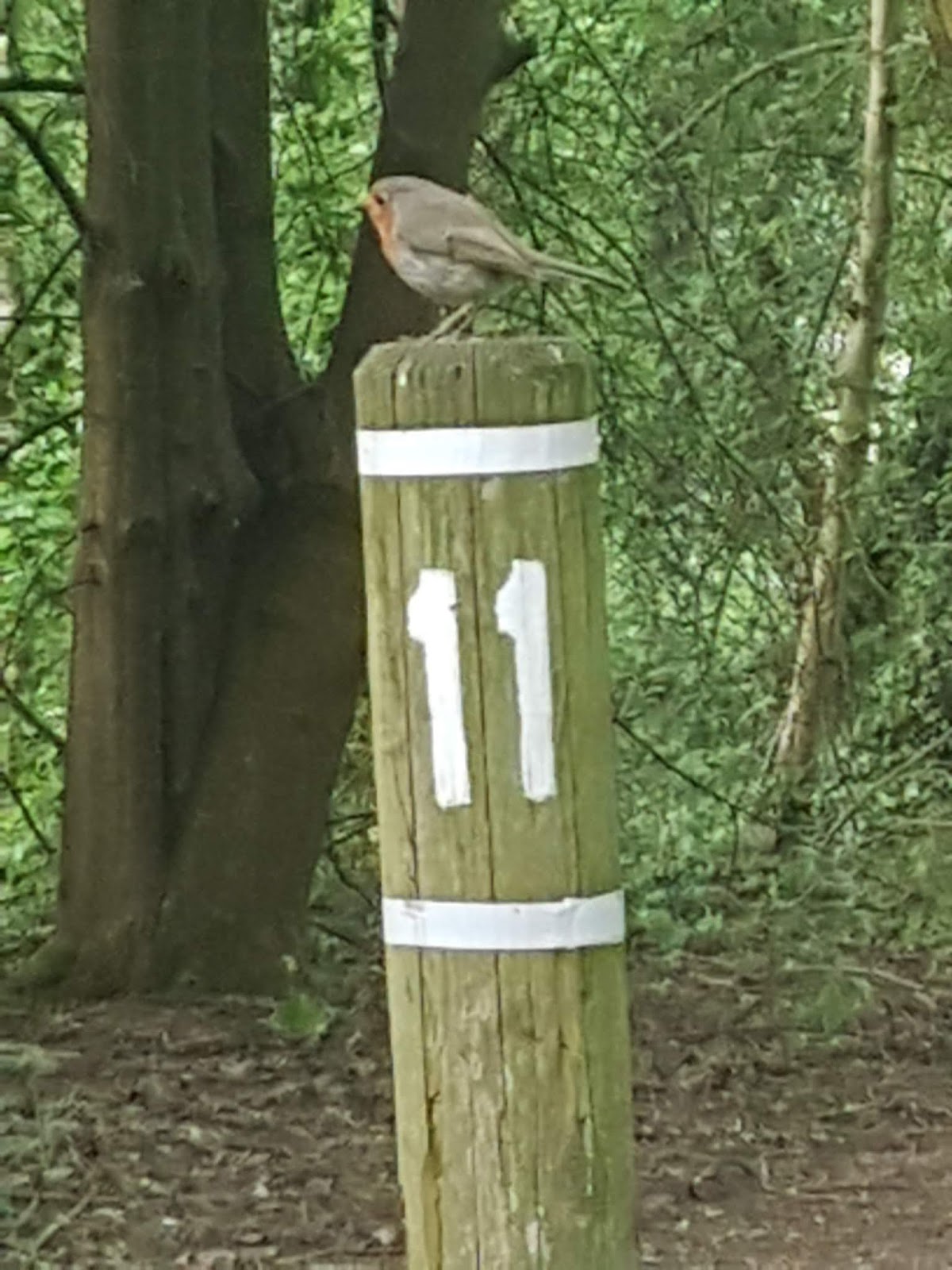
Legs eleven

This little robin was snapped by Nadya Webster.


Perhaps he/she will be adding to the white paint

Wednesday, 8 May 2019

Oak apples

These hard brown balls on the twigs of young oaks are NOT oak apples; they are MARBLE GALLS.  Green and hard to see in late summer, by now they are hard and woody.  You can usually find a small hole where the adult gall wasp has emerged.


Now this (below) IS an oak apple.  It starts off small and pink  - like an apple.  


As oak apples mature they change from red to brown but remain softer and scalier than the smaller marble galls.


You can see these oak apples on an oak on the slope above the Jubilee Way 
in the Cowshed Field. 


Each oak apple contains several gall wasp larvae but all either male or female.  They emerge in June or July.


Thursday, 2 May 2019

Wild arum

Just 10 days ago the wild arum flowers were proudly standing up inviting the tiny flies in to pollinate them.


These flies crawl right down inside the flower to drink the tasty liquid at the bottom and then they cannot get out because they are trapped by the one-way ring of hairs, like a sweep's brush, which they passed on their way in.  


But all is not lost;  once they have fertilised the arum with pollen from the last flower they visited, the flower relaxes the trapping hairs and the flies can fly out again and repeat the process at the next wild arum they visit.


But once it has been pollinated the handsome sheath droops, the leaves get nibbled 
and the whole plant retires from view.


until August, when a spike of red berries will appear.


Tuesday, 30 April 2019

Ant on Shield Bug on Human

I felt something land in my hair and whooshed it  out on to the path.  This is the Common Green Shield Bug, Palomina prasina.


 It is one of the many heteropteran bugs whose wings overlap at the back with a transparent patch.

It landed near some ants who immediately took an interest.  You can see one of them has already climbed aboard, hoping to fly business class.  The shield bug shook it off and moved on.  Maybe it felt a bit the same as I did when a shield bug landed on me! 

After its adventure, no doubt it was soon sucking the juice out of some plant or other with its needle like proboscis.


Monday, 29 April 2019

Smut and St George

St George's Day is 23rd April and there is a species of edible fungus called St George's Mushroom, which appears around that date.  Our mycologist Simon photographed these examples last week.


Simon also noticed something else.  I expect you recognise this flower, Red Campion, with a nice white middle.


but this one has gone black in the middle


It's because of a small smut fungus specific to campions.  Sneakily it fills the anthers of male flowers with its dark brown spores which pollinating insects then collect and spread to other campion flowers. 


 But here's the sneakiest bit:  it also invades female flowers and makes them produce artificial things called staminodes that look like the stamens of a male flower. These are also filled with fungal spores.  The pollinators are tricked into thinking these are pollen grains and transport them as well.  Such a clever little SMUT!

All photos by Simon Harding


Sunday, 28 April 2019

Bluebells - a rising tide?


We don't yet have a sea of bluebells under our trees but we do have lots of clumps, which are gradually spreading, either by division of the bulbs to fill in the gaps, or by seed to start new clumps.


Cutting back the undergrowth helps them to compete but they are only in bloom for a short period - now, at the end of April.