Wednesday, 11 October 2023

MOLE SEASON

Now is the season when molehils appear.  The molehills are not homes but spoil heaps from the tunnels.


Actually moles have to tunnel all year in search of earthworms, leather jackets, wire worms, beetle larvae, etc, or they will starve after a few hours without food.

They live solitary lives except for the pairing season in March and April, after which between two and seven pink and hairless molekins are born.

Thursday, 5 October 2023

MOLLUSCS

After a dry spell molluscs (slugs and snails) are delighted 
with the wet conditions following a rain shower. 

This slug (Arion ater rufus) is the orange version of the Great BLACK Slug (Arion ater)It is one of the larger slugs found in Britain but is not the one that eats your choice garden plants.  It prefers dead plant or animal material and fungi.


Like all slugs and snails it has four tentacles or 'horns'.  The two larger ones are for sight, though molluscs can only distinguish light and dark.  The smaller pair, lower down are for tasting smelling or feeling.  If touched, molluscs will retract their tentacles, and if really upset they will contract to make themselves shorter and fatter.


The troublesome ones are small and black or beige. They're often hard to see.  This little blighter looks like  a small blob of dirt until you get close and see how he has been chomping away on an apple.


Snails are slightly more popular than slugs, - at least with children.  They have shells of course, while slugs just have a leathery oval at the front end called a mantle. 

SHELL SHOCK

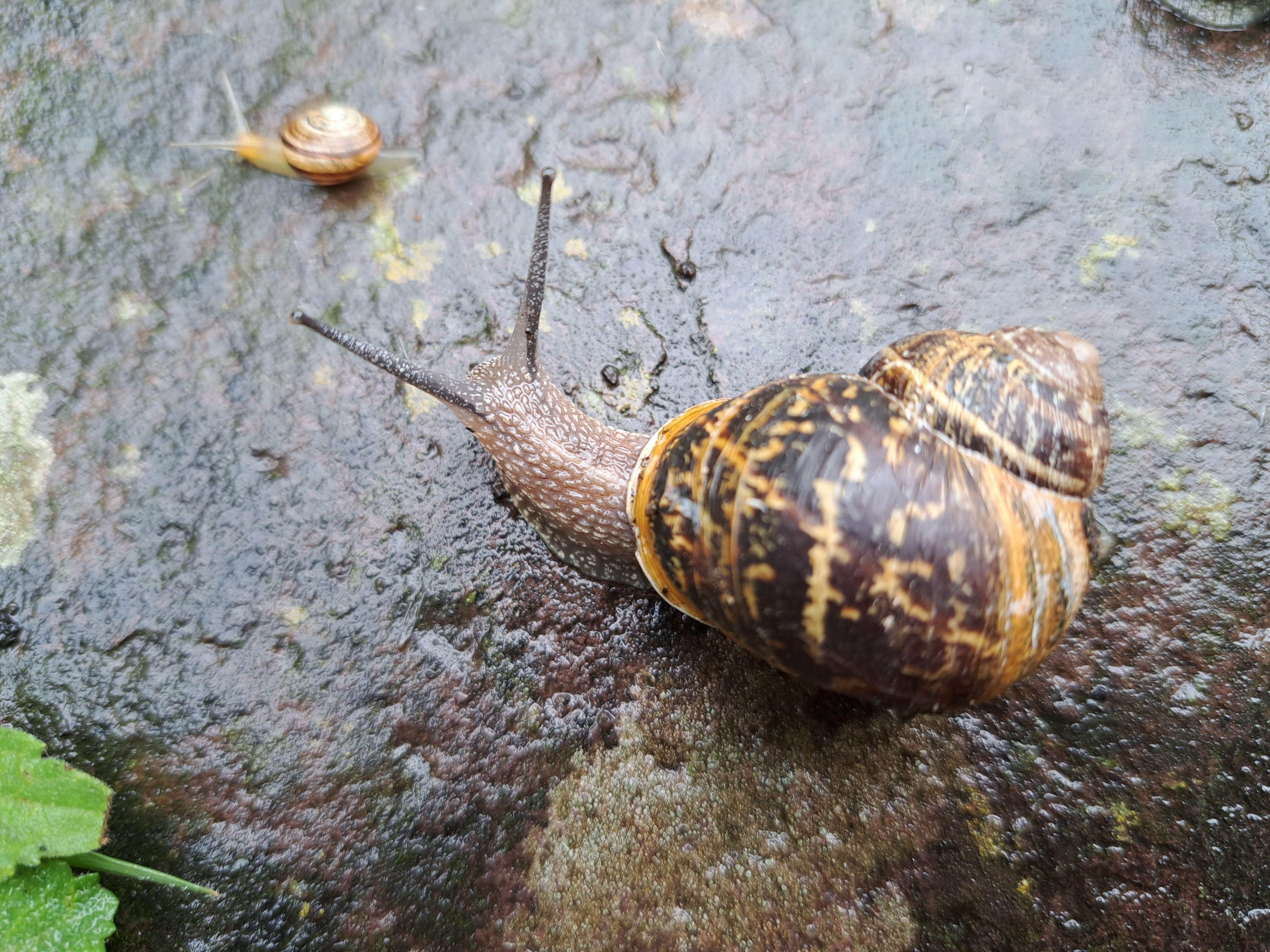
Here we have the Common or Garden Snail with a youngster of a different species.


Snails too have four tentacles and in the image below you can just make out the 'eyes' at the ends of the longer tentacles.


Even these little Banded Snails have tentacles.  The one on the left was very shy.


This species (Cepea nemoralis) also known as the Brown-lipped Snail is very varied in colour: you may find yellow or orange individuals without any stripes and the stripy ones may have a few or a lot of stripes.

There are 90+ species of land snails in the UK and 30+ species of slugs.  They occupy an important niche, providing food for hedgehogs, thrushes and glow-worms, to name a few, and they also have an important composting role, recycling any dead material.


Saturday, 30 September 2023

LIME SPINNERS

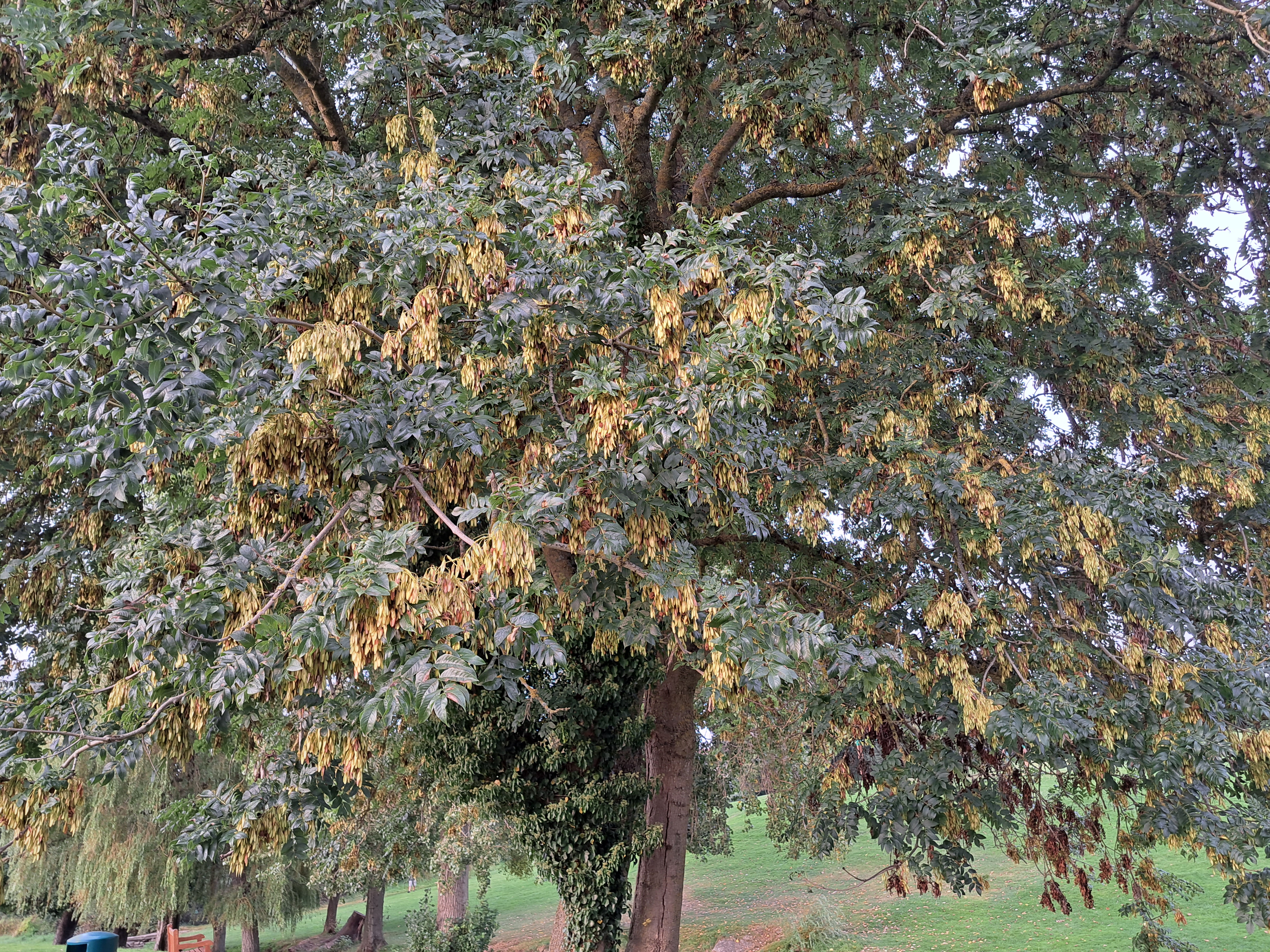
On a windy day these items came spinning down gracefully from the tree above.

 
To spread its seeds as widely as possible the lime tree supplies each little bunch of seeds with a bract that acts as an autogyro spinning the seeds away from the mother tree. each bract may carry from one  up to five fruits.

Although there is a row of about ten mature limes beside the old railway wall at Tesco, Thornbury, this tree seems to be the only one that is fruiting.


Thursday, 28 September 2023

RAT

The remains of a Brown Rat (Rattus norvegicus


Although I worry that Polo, our cat, might be catching birds, she does seem to concentrate on bank voles, woodmice and the occasional rat.

The long scaly tail is the best clue to the identity of this rodent.
Not much else to go on.  Although they are part of the native wildlife scene, brown rats are not desirable in the home or garden.

Brown rats can produce up to 5 litters of 12 young in a year.
So Go Polo Go.


Tuesday, 26 September 2023

ASH GALLS

The ash keys on some trees are an attractive yellow contrasting with the green foliage. 


A closer look revealed several small brown 'cauliflowers' on the flower/seed stalks


These are cauliflower galls caused be a tiny mite, Aceria fraxinivora.


Sunday, 24 September 2023

CRANE FLY

September is peak crane fly time.  I remember them appearing in the top corners of the tent when we went camping.  They are attracted to light so they often come into houses at this time of year.  They are quite harmless.

The one in the photo is a male; you can tell because the end of the body is blunt - square even.  Females have a pointed end to the abdomen; this is so that they can deposit their eggs in the soil.


All flies have only two pairs of wings unlike most insects which have four.  Instead of the second pair they have two drumstick-like organs called halteres which help with balance in flight.  The halteres on common crane flies are particularly large and visible.  In the photo below I managed to get one of the halteres in focus - almost.


Crane flies only live for 10 - 15 days so they have to get on with the business of mating and laying eggs a.s.a.p.   You may see a pair joined end to end and when the female is laying eggs she bounces up and down on her spindly legs as she pushes her ovipositor into the soil.  The legs are often damaged or missing, which doesn't seem to worry them.

 The larvae are called leather jackets and are a menace because they feed on the roots of grasses and other plants.  They are, however, an important source of food for hedgehogs, badgers, foxes and birds.  If your lawn gets dug up it may mean that someone has been after leather jackets.  What look like two eyes are actually breathing spiracles; the head is at the other end but they don't need eyes anyway as they live their whole life underground.

Photo: G Bradley on www.uksafari.com

Crane flies are also known as daddy longlegs but don't confuse them with cobweb spiders or harvestmen, which are also called daddy longlegs.


Friday, 22 September 2023

PLANT DESTROYER

The dark stains on the trunk of this alder tree are probably a symptom of a Phytophthora alni infection. You can see that the branches are dying because the bark and cambium have been killed.


Phytophthoras are organisms a bit like fungi but different.  They ae sometimes referred to as water moulds.   There are at least 200 known species. Phytophthora kernoviae produces similar symptoms in beech trees and Phytophthora infestans causes potato blight.  There is almost no known cure or antidote so they are indeed plant destroyers, which is what Phytophthora means.